
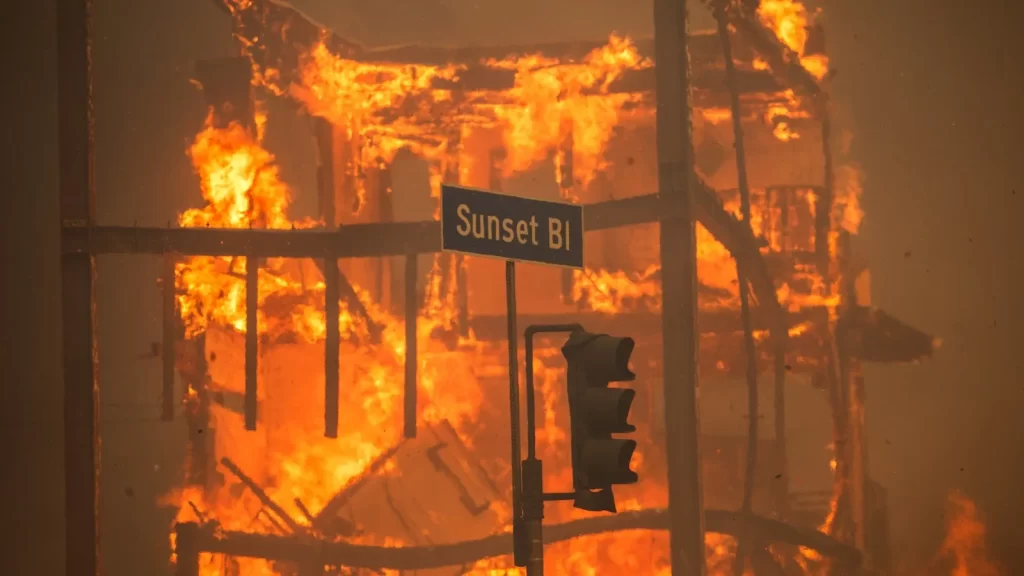
The first days of 2025 have brought images of devastation from Los Angeles that are impossible to ignore. Towering flames, choking smoke, and heartbreaking scenes of loss remind us that the impacts of climate change are no longer distant threats but present-day catastrophes. As the world’s wealthiest city struggles against the fury of nature, one question demands our attention: If this is the reality now, what will our world look like in 2030, 2040, or 2050?
“Even the wealthiest are unprepared.” – BBC
Scientists and experts agree: these wildfires are no accident. Climate change, fuelled by human activities, is driving extreme weather conditions. The Guardian aptly described the crisis, saying, “These fires are not natural disasters; they are man-made disasters worsened by our inaction.” From intense droughts to sudden deluges that spark “hydroclimate whiplash,” the Earth’s fragile balance has tipped, leaving devastation in its wake.
The BBC noted, “Even the wealthiest cities in the world are left powerless against the compounded impacts of global warming.” A series of unusually wet winters followed by extreme drought turned Southern California into a tinderbox, and then Santa Ana winds fanned the flames into an inferno. As Yale Environment 360 observed, “Climate change has made extremes more extreme, creating a world where disasters feed off one another.” The Conversation explained further: “Hydroclimate whiplash is no longer a rare phenomenon but a recurring feature of our climate, creating the perfect storm for wildfire disasters.”
The Human and Financial Toll
The staggering cost of these wildfires – estimated at up to $150 billion – represents more than just financial loss. It’s a human tragedy. Families are displaced, lives lost, and the air becomes a hazard to breathe. “These fires show the limits of even a wealthy nation’s ability to adapt,” wrote The New York Times, emphasizing that resources alone cannot insulate anyone from climate chaos.
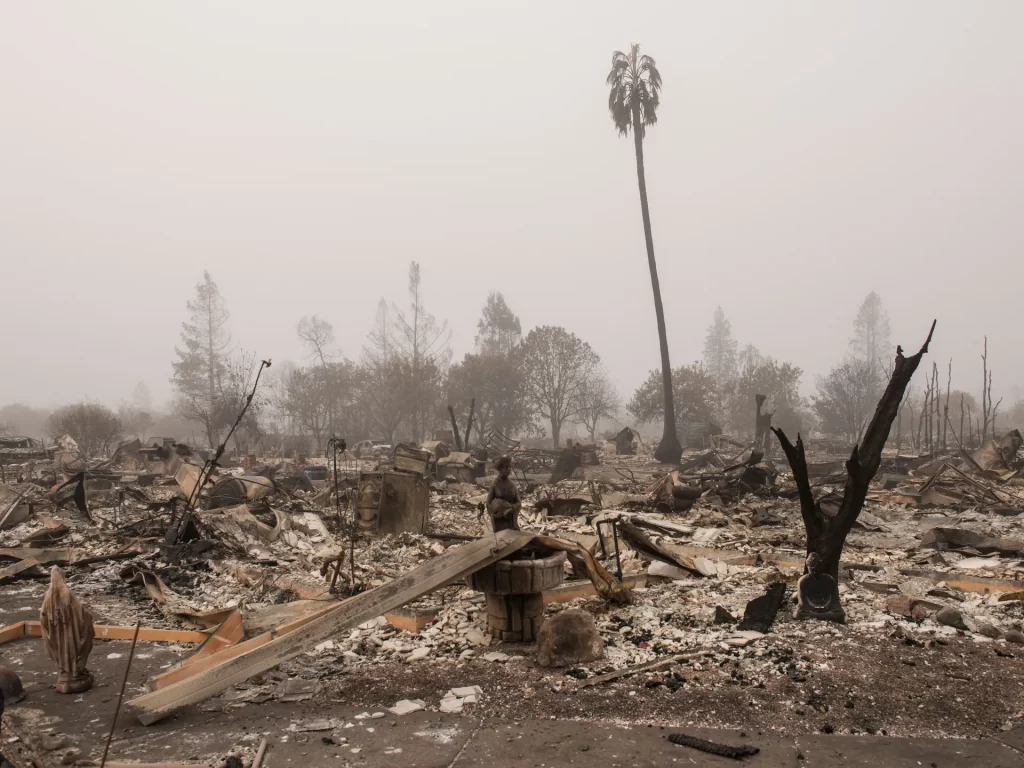
The Conversation emphasized the human toll of this disaster, saying, “The lives of countless Angelenos have been upended. Entire neighborhoods have vanished, and health systems are overwhelmed by the smoke-related illnesses that follow these infernos.” These scenes are harrowing, but they are also a prelude to what will become more frequent without decisive action.
No One Is Safe
While Los Angeles grapples with the fallout, millions worldwide face even greater vulnerabilities. The Independent warns, “If a city like LA can be brought to its knees, imagine the consequences for nations with far fewer resources.” This is not a problem confined to one corner of the globe – it is a harbinger of what awaits us all.
TIME delivered a stark warning: “Los Angeles’ wildfires are not just isolated incidents; they are the harsh realities of living in a world that has warmed by 1.5°C. Each fire is a symptom of the broader crisis, and a clear call to action to address the climate emergency before it worsens.” Yale Environment 360 underscored that disasters like these are “crystallizing moments” that show how urgent action is to avoid the catastrophic futures we fear.
Act Now, Not Later
We still have time to change course. The Council on Foreign Relations insists on “climate realism,” a commitment to policy changes and sustainable innovation. But every day we delay increases the likelihood of ‘climate Armageddon.’ TIME framed this starkly: “What we’re witnessing now is only the beginning. Without immediate and decisive action, the future will be defined by cascading disasters that are more intense and harder to escape.” The Guardian emphasized, “The science is clear: humanity’s window for action is shrinking. But there is hope if we move now.”
Conclusion: Our Responsibility
At Packamama, we believe in doing our part to combat climate change. The scenes in LA are a wake-up call for all of us to accelerate our climate efforts. Every step counts, and together we can avoid a future defined by disasters. Let’s ensure that when the next generation looks back, they see this as the moment humanity chose action over apathy.
The world is watching, and the time for action is now.
Sources:
https://www.bbc.com/news/articles/c0ewe4p9128o
https://www.theguardian.com/world/2025/jan/09/los-angeles-wildfires-climate-disasters
https://e360.yale.edu/digest/los-angeles-fires-climate-change
https://www.nytimes.com/2025/01/10/climate/california-fires-climate-change.html
https://www.nytimes.com/2025/01/10/climate/california-fires-climate-change-disasters.html
https://time.com/7205644/los-angeles-california-fires-climate-change/
https://www.cfr.org/expert-brief/la-fires-show-need-climate-realism